
Fidel Castro, celebrated for decades as a hero of the Communist and socialist left, was born on August 13, 1926. Tomorrow marks the centenary of his birth.
Castro’s armed revolution triumphed in 1959 with promises of social justice, equality and prosperity.
With massive economic support from the Soviet Union, Cuba built a system that provided free education, universal health care and other basic social services.
The revolution rightly takes credit for achievements such as expanded literacy and broad access to education and medical care.
But the Cuban story cannot be measured only by food, shelter, education and health care.
Human beings also seek freedom, the freedom to speak, write, worship, associate, travel, communicate, access information, pursue an independent livelihood, and participate meaningfully in the political life of their country.
Those aspirations have become even more powerful in the age of the Internet.
Cubans can see how people live elsewhere and can compare their own opportunities with those available in more open societies.
Yet Cuba continues to restrict independent journalism, political opposition and free expression. Critics and protesters have been imprisoned, and hundreds of political prisoners remain behind bars.
Cuba today is also facing one of its deepest economic and humanitarian crises in decades.
Prolonged blackouts, fuel shortages, deteriorating infrastructure, shortages of food and medicine, inflation and the collapse of public transportation have made daily life increasingly difficult.
Today, many Cubans are enduring blackouts lasting for days, while neighbourhood protests are erupting over electricity shortages and deteriorating living conditions.
The crisis cannot honestly be attributed to one cause.
The American embargo and the much tougher U.S. restrictions on fuel supplies in 2026 have added enormous pressure to an already weakened economy and energy system.
The Cuban government understandably points to these measures.
But the embargo does not by itself explain decades of centralized economic control, political repression, restrictions on private enterprise and the failure to modernize an economy and electrical grid that have left the country so vulnerable.
The result is a painful paradox. A revolution that promised to create a more equal and prosperous society has produced a country from which large numbers of its citizens continue to leave.
Human Rights Watch reports that Cuba has lost roughly 10 percent of its population in recent years, while independent estimates suggest the decline may be even greater.
The Castro era also lasted longer than Fidel Castro himself.
Fidel governed until 2008, when his brother Raúl Castro succeeded him.
Miguel Díaz-Canel became president in 2019, but the Communist Party has retained political control. Thus, the central political system established by Fidel Castro has survived his death in 2016 and continues today.
George Orwell understood an important truth: totalitarianism is not the monopoly of either the political right or the political left.
Nazi Germany and Stalinist communism demonstrated that political systems built around concentrated power can suppress individual freedom regardless of the ideology used to justify them.
After nearly seven decades, Cuba therefore offers a complicated but sobering legacy. The revolution achieved genuine advances in literacy, education and access to health care, but it failed to deliver the broad prosperity, political freedom and economic opportunity that its promises implied.
Its centralized political system has survived while its economy has deteriorated and its people have increasingly sought a future elsewhere.
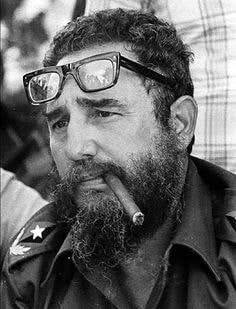
That, perhaps, is the most enduring legacy of Castro: not merely the revolutionary beard, the green uniform and the political mythology, but a system that placed political control above individual freedom and has struggled to provide either prosperity or a convincing path forward.
And Cuba still has its mojito, its famous cigars, and, after 100 years, the unresolved question of when its people will finally be free to choose their own political and economic future.
-Promod Puri
promodpuri.com


https://ci3.googleusercontent.com/meips/ADKq_NbMYld4V4CYTtOdO9qSHCZnEgBgzbgaYx9jC5xdLoY6Xc5Kxpqc6UhW284I2xTQryNQhXk102i8SEzhBIykaS-GYkUxPiFdx9BBizTsjAbSjvaiO8PH7tIMilC11qWJ=s0-d-e1-ft#https://actionnetwork.org/unlayer_files/1618951192477-PI+Logo+Long+EN.png
“There is often talk of human rights, but it is also necessary to talk of the rights of humanity,” Fidel Castro told the United Nations General Assembly in 1979.
“Why should some be miserably poor, so that others can be hugely rich? I speak on behalf of the children in the world who do not have a piece of bread. I speak on behalf of the sick who have no medicine, of those whose rights to life and human dignity have been denied.”
Today, on what would have been El Comandante’s 100th birthday, the Progressive International recalls a revolutionary life devoted to the cause of humanity.
“When he talks with people in the street, they call him: Fidel,” wrote Gabriel García Márquez. “They address him informally, they argue with him, they claim him. It is then that one discovers the unusual human being that the reflection of his own image does not let us see. This is the Fidel Castro that I believe I know.”
This was the “unusual being”, who from the mountains of the Sierra Maestra to the plains of southern Angola, never shirked the struggle for liberation.
The Fidel who survived more than 600 assassination attempts to construct socialism on a small Caribbean island just 90 miles from the heart of imperialism.
The Fidel who abhorred iconography, refused recognition and, when asked what he most wished to do most in this world, immediately replied: “stand on a corner.”
Today, as the Trump administration prepares to invade Cuba, Fidel’s centenary is of particular importance. It reminds us that, in spite of Washington’s decades-long shadow war, the Cuban revolution endures.
MARK FIDEL’S CENTENARY. ORDER YOUR POSTER TODAY.
That’s why the Progressive International Workshop has released a limited-edition commemorative poster to mark the anniversary.
Designed by Gabriel Silveira, all proceeds will support our internationalist campaigns – including those fighting Washington’s illegal siege of Cuba.
Will you support our vital work by ordering a commemorative poster?
In solidarity,
The Progressive International Secretariat
Facebook
Twitter
Instagram
Youtube
https://ci3.googleusercontent.com/meips/ADKq_NbvtBL93d6n9-TIvsrZgz5Dxs2vCMYGI1wOUYzqSyOMa6I1u00GKSVAZF0yAnyZ2aGvnmCuQUKsMZ6eqTCMrdH12fIt-UAQTUmb088_YueAHVyEKgTllgfgHqAm0-x0_HYE2fMdw0GHchWdcuIA6WNbne4TouI=s0-d-e1-ft#https://actionnetwork.org/unlayer_files/1653381064950-map%E2%80%94pi%E2%80%94logo%E2%80%94EN.png
LikeLiked by 1 person