Guru Nanak Dev’s Aarti transcends mere ritual, celebrating the cosmos as a divine spectacle. His hymn encapsulates nature’s elements in a celestial concert, inviting a universal spiritual experience. The Aarti represents interconnectedness, promoting unity in diversity, reflecting Tagore’s vision of it as an anthem for all humanity, encouraging recognition of the divine in everyday beauty.
Tag: Religion
religious articles and blogs
Do Atheists And Non-religious people Need To Have A place for Congregation?
Church without God: How secular congregations fill a need for some nonreligious Americans Jacqui Frost, Purdue University Shared testimonies, collective … More
THE WORLD NEEDS A NEW POLITICAL SYSTEM OF EVOLVING RATIONALISM BASED ON HUMANISM
By Promod Puri In my social, religious, and political sentiments that influence my behaviour and outlook toward society, I am … More
SANT KABIR’S CONTRIBUTION TO EVOLVING MODERN WORLD
“It did not take long to realize that the ‘modern’ world we inhabit had evolved not in one of its … More
Culture and national identity
In a multicultural Canadian society there are a multitude of cultures, traditions and religions, with lot more sub banners within each group. It is a myriad with a diversified web which gives Canada an image of acceptance and tolerance.
RELIGION HAS BEEN THE MOTIVATING FORCE IN AMERICA’S CIVIL RIGHTS MOVEMENT
Even now, with very few exceptions, the American civil rights movement has never been led on a political platform.
WHERE IS GOD AMID CORONAVIRUS?
The business of religion, like any other business, is down. But this business is exceptional. In principle, besides being a medium to seek God’s grace and express gratitude, religion should reveal the path to discern and realize the nature of the Creator.
Where is God in the Global Viral Pandemic?
Amid the global pandemic, places of worship are vacant, impacting the “business of religion.” While some seek divine intervention, others question the existence of God in the face of crisis. The rationality of seeking physical proof of God is challenged, calling for a comprehensive review of understanding. This thought-provoking issue prompts further discussion.
What Does Goddess Kali’s Unusual And Scary Look Mean
In my understanding of Hinduism, there is more in its nature of study and deliberations than just religion. It is … More
Understanding Guru Gobind Singh’s Declaration for Sikhs
Originally posted on Progressive Hindu Dialogue:
? The 10th Sikh Guru, Guru Gobind Singh, close to his death, sealed the continuity of…
Understanding God: Beyond Rituals and Fear
The concept of God as a controlling authority in rituals and traditions creates fear, hindering true understanding. The study of God involves exploring both His celestial and spiritual nature, linking theology and science to comprehend His existence. Recognizing God as both an entity and an active force emphasizes the importance of moral actions in experiencing His presence.
The Significance of Idol Worship in Hinduism
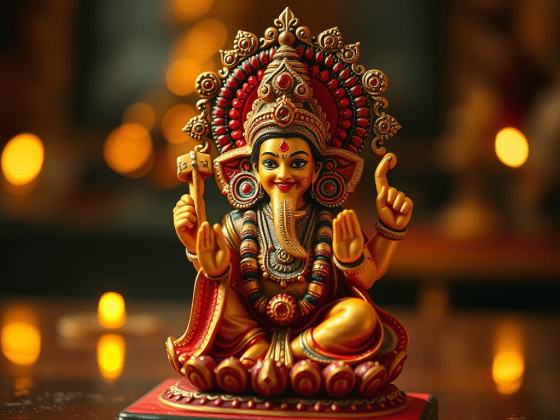
The worship of murtis in Hinduism represents a deep connection between devotees and the Divine, facilitating a one-on-one relationship. Murtis serve as symbols that help focus the mind for worship, offering both psychological support and spiritual reminders. They also enrich Hindu iconology and reflect the secular nature of Hindu art through diverse representations, notably of Lord Ganesh.
Building Divine Residency More Relevant Than Knowing God He or She
By Promod Puri If God or the Supreme Being is He, She or It; residing in heaven, up there in … More
The Significance of Om in Hinduism and the Juxtaposition with Trump
The Republican Hindu Coalition organized a fundraising event for Donald Trump, calling themselves “Hindus for Trump” and featuring the sacred symbol “om” on the event poster. However, the juxtaposition of Trump and this revered Hindu symbol raises questions, as the meaning of “om” is complex and varied within Hindu traditions, representing diverse voices and beliefs.
From The Pen Of Baba Bulleh Shah
The content emphasizes the importance of introspection and self-awareness. It critiques the tendency to seek knowledge externally, attend religious places, and confront external evils while neglecting personal reflection and the battles within oneself, highlighting the wisdom of recognizing and addressing one’s inner self, as articulated by Bulleh Shah.
Virasat-E-Khalsa: A Marvel of Sikh Heritage
The Virasat-E-Khalsa, also known as Khalsa Heritage Complex or “Ajuba,” is a marvel near Chandigarh. This museum offers an immersive learning experience on Sikh history, with impressive architecture and technology. Designed by Moshe Safdie, the expansive museum aims to illuminate the vision of Sikh Gurus. It stands near the historic Anandpur Sahib Gurdwara.
The Origins of Hinduism: A Unique Evolution
Hinduism likely originated around 7000 BC in the Indus Valley Civilization, which peaked around 2000 BC. Its development lacked a single founder, allowing the religion to evolve freely and adapt over time. This absence of a specific initiator has provided Hinduism with a distinctive advantage in its growth and evolution.
GURU MANEYO GRANTH
Guru Gobind Singh, the 10th Sikh Guru, proclaimed the Adi Granth as the eternal Guru, emphasizing personal study and contemplation of its teachings. His hymn encourages Sikhs to seek wisdom in its words, stating that those who genuinely seek will find divine connection. He advocates for reasoned understanding over blind faith in following the scriptures.
Seeking Divine Spirit
ॐ भूर्भुवस्व: | तत्सवितुर्वरेण्यम् | भर्गो देवस्य धीमहि | धियो यो न: प्रचोदयात् Aum bhur bhuvah swah, tat savitur varenvam. … More
Composition Of God In Hinduism
The content explores the multifaceted perceptions of God and the role of human thought in understanding divine involvement in life. It emphasizes the importance of promoting virtuous thoughts to create good karma, underpinning a disciplined approach to spirituality. Notably, the Gayatri Mantra is highlighted as a tool for enlightenment and guidance.
Understanding Hindutva: Its Roots and Ideology
Hindutva, introduced by Vinayak Damodar Savarkar in 1923, embodies a nationalist ideology emerging from Hinduism, emphasizing a collective cultural identity. While attempting to secularize and include all Indian-born communities, it excludes foreign religions. Savarkar defines it as a broader cultural concept distinguished from the religious nuances of Hinduism, though it risks undermining India’s pluralism.
Culture Supersedes Religion in Establishing National Identity
By Promod Puri Culture is a distinctive feature of one group of people comprising of several aspects. One of them … More
Hinduism and Vegetarian Diet
By Arran Stephens The overwhelming majority of the world’s Hindus live in India, which has the largest vegetarian population on … More
Message of Universality in Hindu Mantra
By Promod Puri OM PURNAM MANTRA “Om purnam adah purnam idam purnat purnam udachyate purnasya purnam adaya purnam evavashishyate”. An … More
Quantum Theory And Om
Ever wonder why we chant “om” before our yoga practice or prayer? Check out this interesting take on how Quantum … More
SIGNIFICANCE OF IDOL WORSHIPPING IN HINDUISM
Image formation is a very natural trait in human psychology. In our conscious state all our feelings, ideas and impulses … More
Bad Rituals Breed Fanaticism
One major drawback instituted in ambiguous rituals is the fear factor. And in absurdity, some rituals promise to work like … More
Hinduism and Lord Ganesh
The art community’s fascination for Lord Ganesh is due to His unique appearance as a clearly recognizable elephant tusk-hooded portrayal. … More