GODDESS KALI STANDS UNIQUE IN HINDU THOUGHT
Posted by Promod Puri on
The study of Goddess Kali, with her unique personality, is what separates Hinduism from the rest of the world’s religions.
It is in this context that the figure of Kali reveals an aspect of Hindu thought and philosophy that defies rationality, spirituality, myth and meaning.
It is her uncommon look, temperament and actions that add to the diverse outlook of Hinduism.
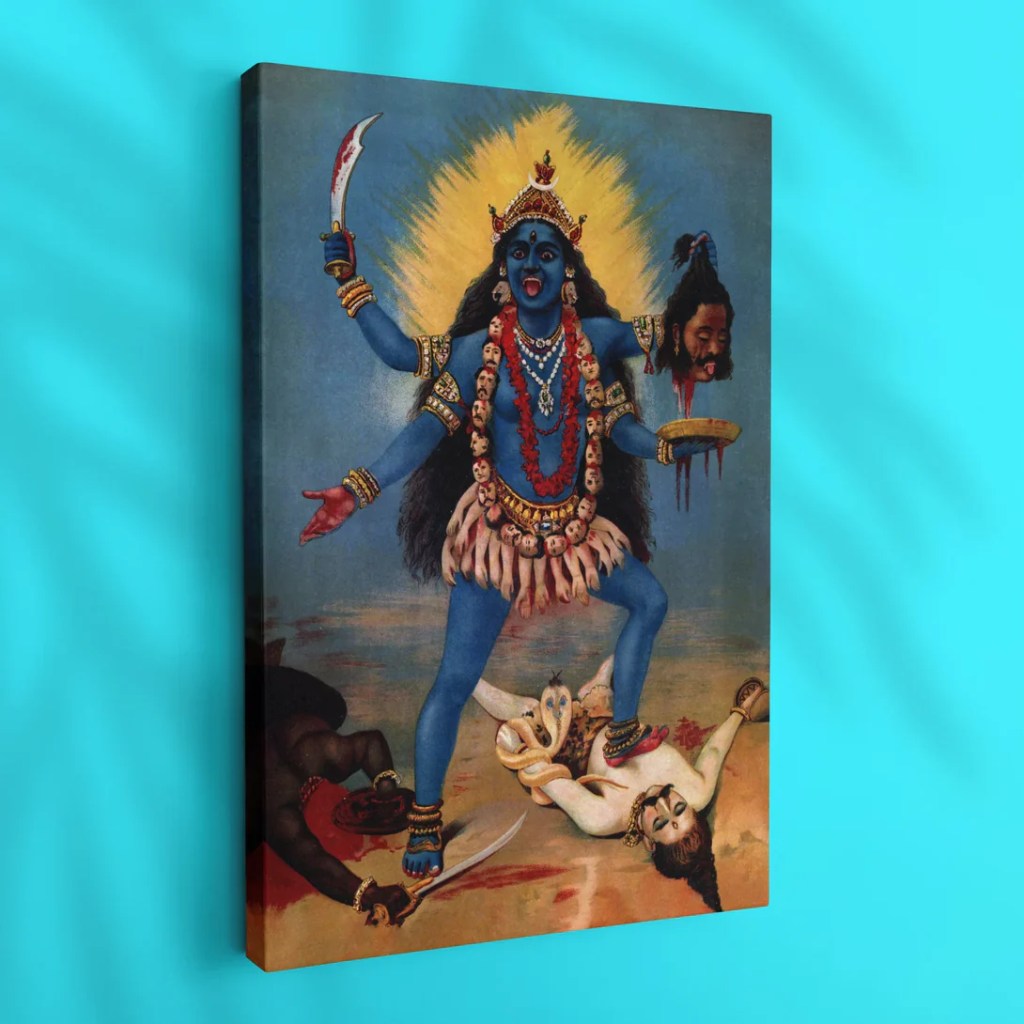
Kali’s appearance is dark blue with sunken eyes. Her long, blood-red tongue, often shown protruding, gives her a ferocious image, typically portrayed with a terrifying and angry stare.
Her scantily covered body is adorned with a long garland of severed skulls—symbols of demons she destroyed at the appeal of her followers. The skirt she wears is made of the severed arms of defeated enemies.
Kali is often depicted in a bloodthirsty and feral form, with blood dripping from the severed heads she holds in her hands. Her mood is terrifying and unruly.
Indeed, she is not a pleasant sight when compared to other Hindu goddesses, who are often shown draped in colourful sarees and adorned with beautiful jewellery.
——————————————————————-
A FORCE BEYOND REASON
Kali is a Hindu goddess of death, time and destruction. She is the Shakti, representing divine feminine power.
She is like a mad storm, a typhoon or a wildfire—relentless in her furious crusade, sparing no one.
A force of nature, her actions and motives remain mystified, defying reason and explanation.
Kali is not concerned about the consequences of her actions. She is independent, and her movements cannot be disciplined.
She is a demon slayer, and her psyche represents justifiable female rage and resistance.
————————————————————————–
THE RAKTABIJA EPISODE
Kali’s personality is powerfully illustrated in the myth of her battle with the demon Raktabija.
Other deities had tried to defeat him but failed. Each drop of blood that fell from his wounds would generate a new clone of the demon, multiplying his strength.
Eventually, the deities called upon Kali, recognising that only she possessed the power to destroy him.
With her tongue outstretched and eyes blazing, filling the skies with her roar, Kali entered the battlefield alone.
She defeated Raktabija by drinking his blood before it could touch the ground, preventing the creation of further clones. In doing so, she annihilated both the demon and his multiplying army.
Her victory was marked by the severed heads she wore as trophies around her neck.
————————————————————————–
DANCE OF DESTRUCTION AND RESTORATION
In the aftermath of her triumph, Kali broke into a frenzied dance.
The more she danced, the more intense and destructive it became, threatening the very existence of the world.
To stop her, Lord Shiva intervened. He lay down in her path, allowing Kali to step on him.
The moment she realised she had stepped on Shiva, her fury subsided. The dance halted, and the world was saved.
Kali is often depicted standing or dancing upon Shiva, who lies calm and still beneath her—symbolising the balance between destruction and preservation.
Acclaimed artist Raja Ravi Varma captured this dramatic moment in one of his most famous paintings, portraying Shiva beneath Kali’s foot.
————————————————————————–
DUALITY AND FEMININE
Despite her fierce and terrifying form, Kali also embodies a calm and nurturing aspect. She is Parvati or Gauri—the consort of Shiva.
This duality, along with her multiple arms carrying both destructive and benevolent symbols, reflects the many dimensions of womanhood.
Kali represents the multiple roles women play—their struggles, resilience and strength in confronting life’s battles.
She is, in this sense, a symbol of contemporary womanhood.
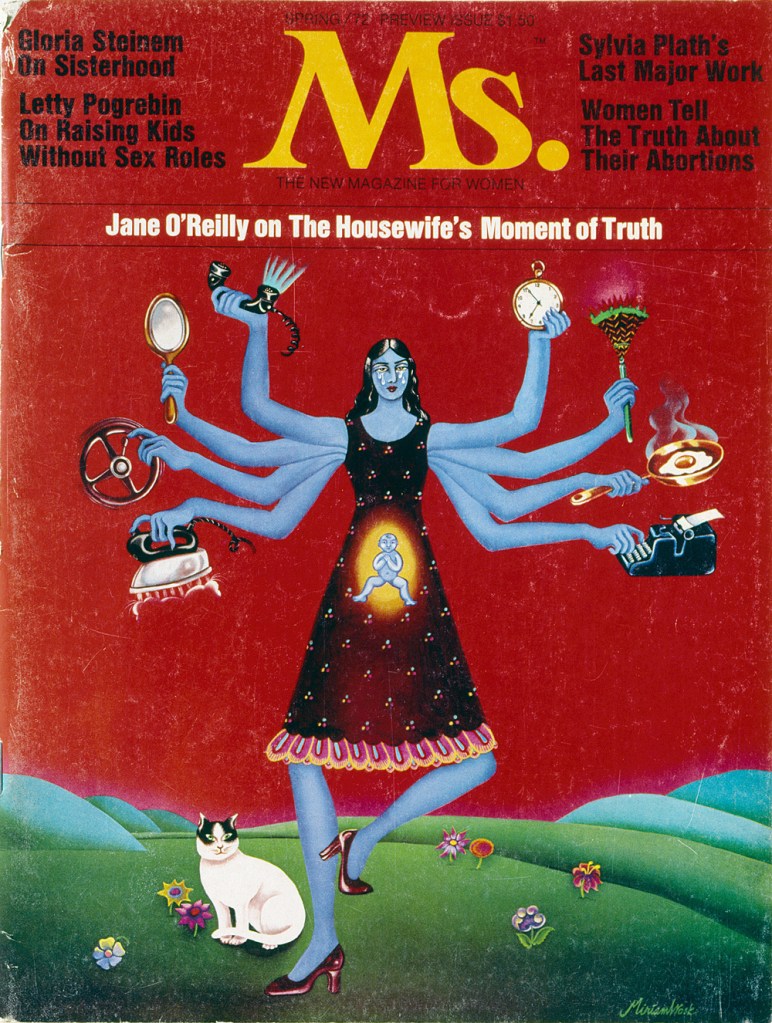
Her cultural reach extends beyond religious tradition. Kali appeared on the cover of the first edition of Ms. Magazine in 1972, where artist Miriam Wosk depicted a multi-armed woman symbolising the many roles women perform.
————————————————————————-
THE COMPASSIONATE MOTHER
Despite her fearsome imagery, Kali is revered as one of the most loving and compassionate goddesses.
As Ma Kali, or Mother Kali, she is worshipped as the protector of the universe—a divine force who shields her devotees from evil.
She is both destroyer and nurturer, terrifying and tender.
A free and unconstrained goddess, Kali stands ready to confront evil in any age—remaining one of the most complex and powerful symbols in Hindu thought.
by Promod Puri
Progressive Hindu Dialogue
(On the left is the original painting by artist Raja Ravi Varma, on the right is the cover of the first edition of Ms. Magazine.)