
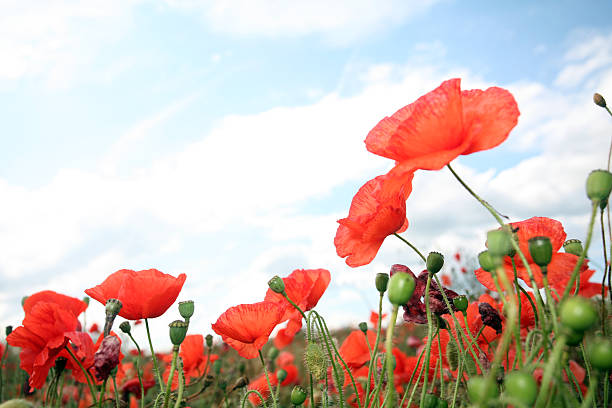
It all happened on the 11th hour of the 11th day of the 11th month, 1918, when the First World War hostilities formally ended, and the occasion gave rise to the red poppy as both a symbol of Remembrance and a hope for a peaceful future.
World War 1 began in 1914 and continued until 1918.
During the conflict, Germany, Austria-Hungary, Bulgaria, and the Ottoman Empire (the Central Powers) fought against Great Britain, France, Russia, Italy, Romania, Japan, the United States, and Canada (the Allied Powers).
In the four years of the war, 16 million soldiers and civilians died.
Remembrance Day is the Armistice Day to mark the war’s end and remember and honour those who died in the line of duty.
(According to the dictionary meaning of armistice, it is “a temporary suspension of hostilities by agreement of the warring parties; truce.”)
Remembrance Day is a sad day to observe when human lives are sacrificed through the conviction and orders of the ruling elite of the combatant nations.
On the battlefield, humanity gets divided into enemies. Human beings appear as marked targets. Those who get killed become martyrs, and the killers emerge as heroes.
When 16 million people died during WW1 as soldiers and civilians, millions of families faced devastation, countless children were orphaned, and innumerable women became widowed; besides the destruction and demolition of buildings and properties, schools and hospitals, creating an overall chaos and havoc that took decades to rebuild from the rubble.
But all that becomes the pages of history. What remains severe and compelling is the essentiality of war to win from one power block over the other, or in the name of freedom, justice, and inflicting defeat on the enemy.
The war theatre is staged with induced fervour of nationalism and patriotism so that “by the sacrifices made by the courageous and brave, we live in the free world.”
Their courage and sacrifices do matter. But why war in the first place? Does it reflect the failure of the leaders or their intentions igniting and flaring up a war?
Unlike in ancient wars, contemporary leaders don’t get hurt or die on the frontlines. The soldiers die, wounded, mutilated and tortured, handicapped and even mentally disabled.
Putin and Zelenskyy remain safe and secure in their presidential chateaus. So are Netanyahu and Hamas leaders in the current Gaza war, where deaths, destruction, chaos and miseries for ordinary Palestinians have continued for more than two years now.
The First World War, the Second World War, and the ongoing wars on every continent cost trillions of dollars annually in military spending, with catastrophic consequences impacting every aspect of life globally and the environment.
Poet Sahir Ludhianvi: “Who subha kabhi to ayegi,” translation: (hope)that morning will come one day; when there are no more wars, nations dissolve their armies, factories stop manufacturing deadly bombs, drones, missiles, tanks, AK-47s, etc., and the rulers talk and seek peace rather than fight. That would signal my Remembrance Day.
-Promod Puri


Man is the fodder of war. Man and war are realities. They will remain forever. The victor, the vanquished and the well wishers are temporary. Not the leaders, fighters must make a choice of ‘Not to Fight’.
Man is born a fighter; in one way or the other. Man is fighting with hunger. Man is fighting to get elected. Every day man is fighting with himself. Where there are two, there is a fight. It starts from two and spreads like a wild fire.
The ‘fallen’ from both sides are remembered with reverence. They did good thing. They died for us – the future generation. Our homage to them. We cannot say ‘rest in peace’ for them because they died in war.
LikeLiked by 1 person
There are good fights and there are bad fights. Man should not join bad fights.
LikeLike