Besides Humans, Everything Has Consciousness Too

The piece explores the nature of consciousness and its relationship with physical matter, contrasting two theories: Dualism, which sees consciousness as an external force, and Panpsychism, which posits that consciousness exists inherently in all matter. Both theories suggest a fundamental interconnectedness, challenging perceptions of awareness in the universe.

The Universal Appeal of Guru Nanak’s Aarti

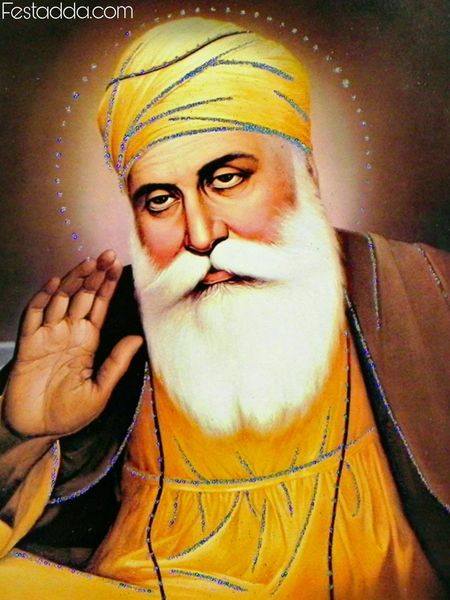
Guru Nanak Dev’s Aarti transcends mere ritual, celebrating the cosmos as a divine spectacle. His hymn encapsulates nature’s elements in a celestial concert, inviting a universal spiritual experience. The Aarti represents interconnectedness, promoting unity in diversity, reflecting Tagore’s vision of it as an anthem for all humanity, encouraging recognition of the divine in everyday beauty.

Understanding Satnam Waheguru: Nanak’s Message of Divine Order

Satnam Waheguru carries profound spiritual significance, symbolizing acceptance of universal truth and divine wonder. It signifies the journey towards truth and enlightenment, promoting moral and ethical principles. Nanak’s message of ‘Hukam razai chalna’ emphasizes following the divine order for peace and harmony within ourselves and our environment. This practical approach represents the dynamics of Satnam Waheguru.

HINDU DEVOTIONAL PRACTICES

Besides the devotional practices at dedicated places like temples, home, or public shrines, a striking and environmental sensitive and gratifying feature of Hindu worshipping practices and reverence is the deification of natural landmarks like rivers, lakes, mountains, plants, and animals.

RIG VEDA: HE KNOWS, PERHAPS He DOES NOT KNOW

Who really knows?
Who will here proclaim it?
Whence was it produced?
Whence is this creation?
The gods came afterward,
with the creation of this universe.
Who then knows whence it has arisen?
Whence this creation has arisen—
perhaps it formed itself, perhaps it did not
the one who looks down on it, in the highest heaven,
only He knows or perhaps He does not know.
even, only He knows – or perhaps He does not know.
– Rig Veda 10:129, translation: Wendy Doniger O’Flaherty, Author, Indologist, and Sanskrit Scholar.

Buddhist and Hindu philosophies help us see clearly, act wisely in an interconnected world

Indian thinkers have been reflecting on interconnectedness for more than two millennia. I study Indian philosophy, and I believe this diverse tradition offers rich and timely insights about how people might better understand global interconnectedness today and act more wisely.

Equality And Duality are Themes In Hindu Mantra:

ॐ पूर्णमदः पूर्णमिदं पूर्णात्पुर्णमुदच्यतेपूर्णश्य पूर्णमादाय पूर्णमेवावशिष्यते ॥ “ Om purnam adah purnam idampurnat purnam udachyatepurnasya purnam adayapurnam evavashishyate”. An ideological … More

Promod Puri’s Vision: Reforming Hinduism for Modern Society

Promod Puri’s book on Hinduism explores its historical evolution, philosophies, and modern challenges. He critically examines social customs and the treatment of marginalized groups, advocating for reform without adhering to traditional ideologies. Puri’s analytical interpretation enhances understanding and promotes equality, dignity, and justice, depicting his work as integral to Hindu reform.

The Significance of Idol Worship in Hinduism

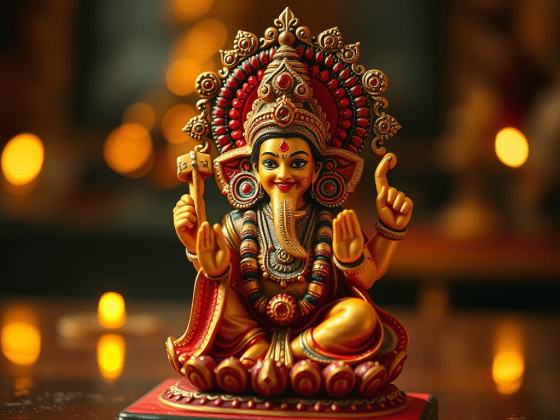
The worship of murtis in Hinduism represents a deep connection between devotees and the Divine, facilitating a one-on-one relationship. Murtis serve as symbols that help focus the mind for worship, offering both psychological support and spiritual reminders. They also enrich Hindu iconology and reflect the secular nature of Hindu art through diverse representations, notably of Lord Ganesh.

From The Pen Of Baba Bulleh Shah

The content emphasizes the importance of introspection and self-awareness. It critiques the tendency to seek knowledge externally, attend religious places, and confront external evils while neglecting personal reflection and the battles within oneself, highlighting the wisdom of recognizing and addressing one’s inner self, as articulated by Bulleh Shah.

Virasat-E-Khalsa: A Marvel of Sikh Heritage

The Virasat-E-Khalsa, also known as Khalsa Heritage Complex or “Ajuba,” is a marvel near Chandigarh. This museum offers an immersive learning experience on Sikh history, with impressive architecture and technology. Designed by Moshe Safdie, the expansive museum aims to illuminate the vision of Sikh Gurus. It stands near the historic Anandpur Sahib Gurdwara.

Composition Of God In Hinduism

The content explores the multifaceted perceptions of God and the role of human thought in understanding divine involvement in life. It emphasizes the importance of promoting virtuous thoughts to create good karma, underpinning a disciplined approach to spirituality. Notably, the Gayatri Mantra is highlighted as a tool for enlightenment and guidance.

Understanding Hindutva: Its Roots and Ideology

Hindutva, introduced by Vinayak Damodar Savarkar in 1923, embodies a nationalist ideology emerging from Hinduism, emphasizing a collective cultural identity. While attempting to secularize and include all Indian-born communities, it excludes foreign religions. Savarkar defines it as a broader cultural concept distinguished from the religious nuances of Hinduism, though it risks undermining India’s pluralism.