
Religion, at its best, is merely a vehicle, meant to deliver the goods of spirituality, ethics, and morality.
But what happens when that vehicle breaks down, or worse, when it is hijacked and loaded with injustice, inequality, and moral decay?
The recipient has every right to reject such a delivery and to seek a better vehicle.
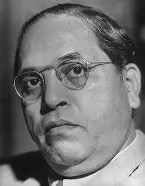
That, in essence, is what B. R. Ambedkar did.
Born into a system that branded him “untouchable,” Ambedkar experienced firsthand the crushing weight of caste discrimination embedded within Hinduism.
Despite his towering intellect and global education, the social order denied him dignity. For him, the problem was not merely social; it was structural, sanctified, and sustained by religious interpretation.
Ambedkar did not abandon religion; he abandoned a system that failed to uphold human equality.
In turning to Buddhism, he found a philosophy that emphasized compassion, rationality, and above all, equality.
Unlike the rigid hierarchies he rejected, Buddhism offered a moral framework free from caste divisions, a vehicle, in his view, that delivered what religion ought to deliver.
His conversion in 1956 was not just a personal spiritual choice; it was a powerful social statement.
It signalled a refusal to accept inherited injustice and an assertion of human dignity.
In one decisive act, Ambedkar transformed religion from a tool of oppression into an instrument of liberation.
In simple terms, he changed the vehicle because the old one no longer deserved the journey.
-Promod Puri
progressivehindudialogue.com
promodpuri.com

 Promod Puri.com