
Now that he has left us—and we have offered our prayers for his “rest in peace”—it is worth revisiting Dharmendra’s brief, uneasy brush with politics and the regret that accompanied it.
Dharmendra entered Parliament as a member of the Bharatiya Janata Party, the party which, under Modi’s leadership since 2014, has pursued a majoritarian agenda, often criticized for its anti-minority tilt and its push toward a Hindu Rashtra anchored in Hindutva ideology.
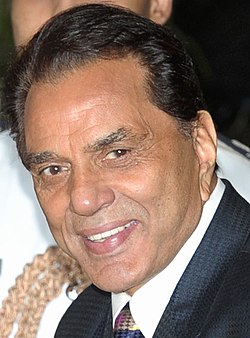
Back in 2004, when the Congress still wielded significant influence, the BJP was scouting for “winnable faces.” It found one in Dharmendra—a beloved star with a massive fan following. The party fielded him from the challenging Bikaner constituency in Rajasthan, even though he hailed from Punjab. His charisma did the rest: with a glitzy, high-profile campaign, Dharmendra cruised to victory, defeating the Congress candidate by nearly 60,000 votes.
But once in Parliament, real life and reel life collided. Dharmendra quickly drew criticism for his near-total absence from constituency responsibilities, choosing instead to spend time on film shoots or at his farmhouse. Other than showing up for his swearing-in, his attendance in Parliament was virtually zero—though the salary and perks never missed him.
Using his influence, he helped secure a Rajya Sabha seat for his second wife, Hema Malini. Later, his son Sunny Deol rode the same BJP wave from Gurdaspur—only to repeat his father’s legacy of negligible attendance in the Lok Sabha.
By 2009, Dharmendra had had enough. He refused another ticket, candidly admitting his regret: “Perhaps that place was not for me,” a telling reflection of his discomfort with the political culture he had stepped into.
Yet even after withdrawing from electoral politics, the “He-Man” of Hindi cinema did not entirely retreat. He continued speaking on national issues, including voicing solidarity with farmers during the 2021 protests—perhaps the most genuine expression of his political conscience.
-Promod Puri

 Promod Puri.com