
Mohammad Rafi, the undisputed king of male playback singing in Hindi cinema for decades, had a profound and enduring love for his native Punjabi language—a connection that shaped the roots of his illustrious career.
Born with the nickname “Pheeku” in Miajitha, a small village in the Amritsar district, Rafi’s journey into music was sparked by a wandering fakir whose mesmerizing voice captivated the young boy. Little Pheeku would eagerly follow the fakir, soaking in the rhythms and melodies, unknowingly planting the seeds of a lifelong devotion to music. A child prodigy was in the making.
In 1935, when Rafi’s family relocated to Lahore, his father continued working as a barber while young Rafi took up odd jobs as a helper.
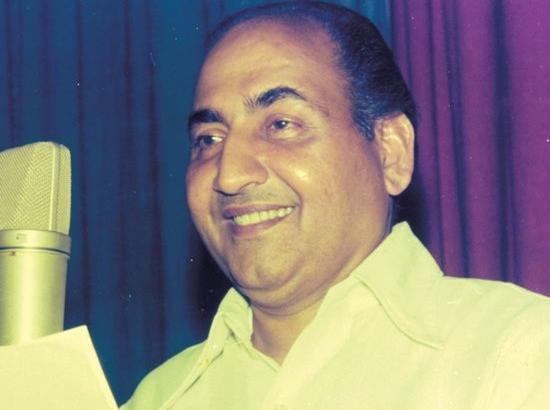
But music had already claimed his heart. A local music teacher, recognizing the boy’s exceptional talent, introduced him to the Lahore Radio station. There, Rafi’s debut performance dazzled audiences, marking the beginning of his career at just 13 years old. By then, he was already a celebrated voice in Lahore’s vibrant music scene.
Lahore, a hub for Punjabi cinema, became Rafi’s training ground. His soulful renditions of Punjabi songs quickly made him the most sought-after voice for the region’s films. Yet, his ambitions stretched beyond borders. Sensing greater opportunities, he moved to Bombay (now Mumbai), where he conquered the world of Hindi cinema.
Despite his meteoric rise in Bollywood, Rafi’s bond with Punjabi music never faded. In 1949, the song “Jag Wala Mela Yaro” from the film Lachchi became a massive hit, showcasing his deep connection to his roots. The track, composed by Sardool Kwatra under the mentorship of Hansraj Bahl, remains a timeless classic.
Rafi’s contributions to Punjabi cinema were monumental. Over his career, he lent his golden voice to 262 songs across 105 Punjabi films and recorded numerous Punjabi folk songs and Gurbani Shabads. His versatility, combined with his authentic Punjabi spirit, elevated the region’s musical heritage to new heights.
Popular female singers like Lata Mangeshkar and Asha Bhonsle joined him in Punjabi film songs. ‘Kaali Kangi Naal’ and ‘Tumba Vajdae Na’ with Lata, became very popular. His duet with Asha Bhosle ‘Tun Peengh Te Main Parchhavan’ was a hit.
Despite his immense popularity in Hindi film songs, Rafi never missed an opportunity to sing in the language of his mother tongue. His song ‘Aji O Munda Moh Leya Taveetan Wala Damdi Da Sakk Malke’ was a hit. Then there was ‘Darh Vatt Zamana Katt Bhale Din Aawange’ (Jugni-1953). ‘Jatt Kudiyaan Ton Darda Mara’ (Bhangra-1959), ‘Teri Kanak Di Raakhi Mundiya’ (Do Lachhian).
Rafi remained a prolific Punjabi singer who rendered many hit numbers in films like Heer Syal, Pagri Sambhal Jatta, Billo, Guddi, Walait Pass, Chaudhary Karnail Singh, Geet Bahaaran De, Khedan De Din Char, Pardesi Dhola, Laajo, Sat Saliyan, Dharti Veeran Di, Sapni, Sassi Punnu, Laaiye Tod Nibhaiye, Dupatta, Kankan De Ohle, Dukh Bhanjan Tera Naam, Bhagat Dhanna Jatt, Morni, Guru Manio Granth, Lachhi, Dhyanu Bhagat, Ladlee, Mahi Munda and Sassi Punnu (1983).
His Punjabi melodies included: ‘Daana-Paani Khich Ke Liaunda’ (Guddi); ‘Ghar Babul Da’ (Chaudhary Karnail Singh); ‘Vekhiya Pishore Vai’ (Pardesi Dhola); ‘Ji Karda Ae Is Duniya Nu’ (Geet Baharaan De); ‘Na Disse Tu’ (Satluj De Kande); ‘Chan De Mathe Daag’ (Dharti Veeran Di); ‘Akhaan De Theekre Wich’ (Sassi Punnu); ‘Jaach Mainu Aa Gayi’ (Shonkan Mele Di); ‘Mitter Pyare Nu’ (Nanak Nam Jahaj Hai); ‘Russ Ke Tu Challi Gaiyon’ (Papi Tarey Anek); ‘Sanu Bukk Naal Paani’ (Ladlee); ‘Eh Mor Kiyon Pailaan’ (Mahi Munda); ‘Na Russ Heere Meriye’ (Chann Pardesi); ‘Laggi Wale’ (Sassi Punnu); ‘Mera Wichhdeya Yaar’ (Sohni Mahiwal) and ‘Matlab Di Eh Duniya’ (Duniya Matlab Di).
Hindi film songs with Punjabi lyrics, such as ‘Main Koi Jhoot Boliya’ (Jagte Raho), ‘Le De Saiyyan Orhni‘ (Pavitra Papi), and ‘Main Jatt Yamla‘ (Pratigya), became very popular.
Mohammad Rafi (December 24, 1924 – July 31, 1980), a maestro of unmatched versatility, left a legacy transcending linguistic and cultural boundaries. Yet, at his core, he remained a true son of Punjab, enriching its music and cementing its place in the annals of Indian cinema.
-by Promod Puri
(Information sources: The list of Punjabi films and Punjabi film songs gathered from some posts on the internet.)

 Promod Puri.com