
Three signature traits define Canada’s opposition leader, Pierre Poilievre: his coarse language, over-the-top exaggerations, and knack for delivering speeches that lack substance.
While Poilievre does not resemble Donald Trump in appearance, he’s got the former U.S. president’s playbook down to an art. Listen to the Conservative leader’s colorful tirades, particularly when he’s on the offensive against NDP leader Jagmeet Singh.
“He’s a fake, a phony, and a fraud!” Poilievre thunders. “How can anyone ever trust this sell-out NDP leader in the future?”
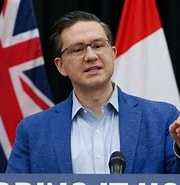
And this is just the appetizer in Poilievre’s feast of hyperbole. According to CBC’s Aaron Wherry, Poilievre’s vocabulary often sounds fresh from a disaster movie script. Take his August news conference on Parliament Hill, for example. “The word “disastrous” made multiple cameos. Finance Minister Chrystia Freeland was crowned “Canada’s worst-ever finance minister,” while Housing Minister Sean Fraser—formerly dubbed “the worst immigration minister in Canadian history”—was accused of “destroying” the immigration system. Environment Minister Steven Guilbeault? Poilievre’s parting shot: “crazy.”
Classy, right? But wait, there’s more. Poilievre doubles down by accusing Singh—a politician championing dental care and other essential services for the working class—of doing it all just to “secure his MP pension.” Ouch.
Not content with roasting individual ministers, Poilievre swung for the fences: the government had apparently unleashed “crime and chaos” across the land. Alliteration seems to be Poilievre’s guilty pleasure, as he piled on phrases like “drugs and disorder,” “death and destruction,” and “housing hell.” Oh, and the carbon tax? According to him, it’s an “existential threat to our economy and way of life,” bound to plunge us into “mass hunger and malnutrition.”
It’s a verbal firestorm, but what’s missing is any semblance of nuance or, frankly, facts. Poilievre’s scorched-earth rhetoric thrills his base, but it does little to elevate the political discourse.
A leader with prime ministerial aspirations ought to represent the values of respect, dignity, and civility that Canadians hold dear—values that aren’t precisely reflected in his bombastic, insult-laden speeches.
In politics, words matter. And for someone vying to be Canada’s next leader, it be wise for Mr. Poilievre to choose his words more carefully—before he burns himself out.

 Promod Puri.com
This is with reference to “Watch Out for Your Language…”
Above Party politics; and malice towards none: – The situation is really bad, whether it is economy, immigration, housing or law and order. About Tax; for how long the national/provincial economies will run on ‘freebees’ to all; the poor and the rich? The situation is ‘between wind and water’. People are living rough. Who is responsible? What is the alternative?
In normal behaviour, language should be bearable. In Party politics, accusations and false accusations are part of the game. Blame game is the basic rule of politics. It is a question of ‘defense’ and ‘offense’. Here the ruling party is on the defensive and the opposition on the offensive side. When people bury their heads in the sand, someone has to bite someone’s head off. Two warring parties cannot speak the same language.
LikeLike