
In a multicultural Canadian society there are a multitude of cultures, traditions and religions, with lot more sub banners within each group. It is a myriad with a diversified web which gives Canada an image of acceptance and tolerance.
Tag: hindu
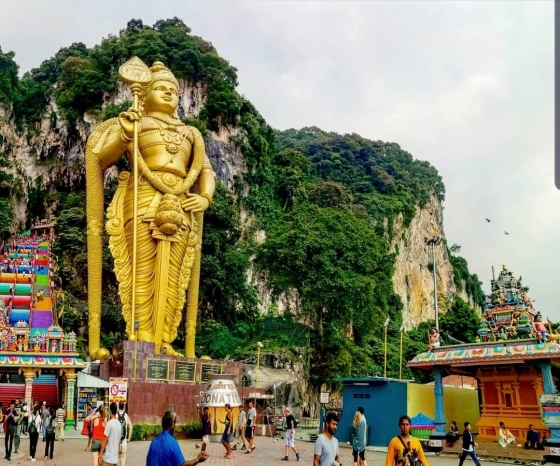
Temples And Other Range Of options In Hindu Worshipping Practices
“Temple-Hinduism” is an expression introduced by Vasudha Narayanan, Professor of Religion, University of Florida. The terminology is not an academic phrasing, nor does it reflect a new sect in Hinduism. It is an interpretation of Hinduism related to the devotional practices of rituals and prayers in the temple’s iconological environment.
HINDU DEVOTIONAL PRACTICES
Besides the devotional practices at dedicated places like temples, home, or public shrines, a striking and environmental sensitive and gratifying feature of Hindu worshipping practices and reverence is the deification of natural landmarks like rivers, lakes, mountains, plants, and animals.
RIG VEDA: HE KNOWS, PERHAPS He DOES NOT KNOW
Who really knows?
Who will here proclaim it?
Whence was it produced?
Whence is this creation?
The gods came afterward,
with the creation of this universe.
Who then knows whence it has arisen?
Whence this creation has arisen—
perhaps it formed itself, perhaps it did not
the one who looks down on it, in the highest heaven,
only He knows or perhaps He does not know.
even, only He knows – or perhaps He does not know.
– Rig Veda 10:129, translation: Wendy Doniger O’Flaherty, Author, Indologist, and Sanskrit Scholar.
Buddhist and Hindu philosophies help us see clearly, act wisely in an interconnected world
Indian thinkers have been reflecting on interconnectedness for more than two millennia. I study Indian philosophy, and I believe this diverse tradition offers rich and timely insights about how people might better understand global interconnectedness today and act more wisely.

PASSING THROUGH RACIST PASSAGE OUR HISTORY FROM HINDOOS TO SOUTH ASIAN CANADIANS
Immigrants, especially from the “visible minority” communities, not only faced racial discrimination in most aspects of their lives in Canada, but they could also discern reflections of bigotry and segregation in their labelings.
In the early part of the twentieth-century immigrants from the Indian subcontinent were all classified as “Hindoos.”
Mantra: An Ingrained Feature In Hinduism
By Promod Puri Peace in all the cosmic environments influences peace in humankind as well An ingrained feature in Hinduism … More

Equality And Duality are Themes In Hindu Mantra:
ॐ पूर्णमदः पूर्णमिदं पूर्णात्पुर्णमुदच्यतेपूर्णश्य पूर्णमादाय पूर्णमेवावशिष्यते ॥ “ Om purnam adah purnam idampurnat purnam udachyatepurnasya purnam adayapurnam evavashishyate”. An ideological … More
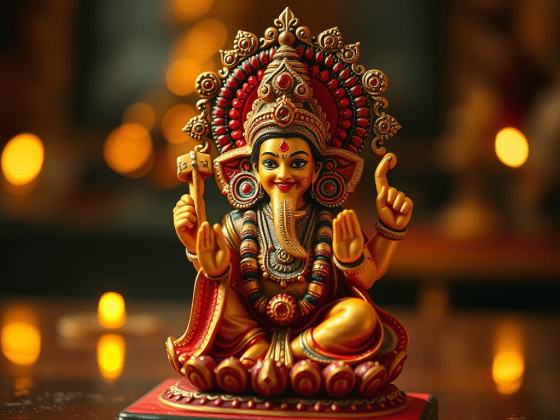
The Significance of Idol Worship in Hinduism
The worship of murtis in Hinduism represents a deep connection between devotees and the Divine, facilitating a one-on-one relationship. Murtis serve as symbols that help focus the mind for worship, offering both psychological support and spiritual reminders. They also enrich Hindu iconology and reflect the secular nature of Hindu art through diverse representations, notably of Lord Ganesh.
From The Pen Of Baba Bulleh Shah
The content emphasizes the importance of introspection and self-awareness. It critiques the tendency to seek knowledge externally, attend religious places, and confront external evils while neglecting personal reflection and the battles within oneself, highlighting the wisdom of recognizing and addressing one’s inner self, as articulated by Bulleh Shah.

The Origins of Hinduism: A Unique Evolution
Hinduism likely originated around 7000 BC in the Indus Valley Civilization, which peaked around 2000 BC. Its development lacked a single founder, allowing the religion to evolve freely and adapt over time. This absence of a specific initiator has provided Hinduism with a distinctive advantage in its growth and evolution.
Genesis Of Kashmir Problem And Its Resolution
By Promod Puri The division of the Indian sub-continent in 1947 generated a persistent hostility between India and Pakistan, a … More
Seeking Divine Spirit
ॐ भूर्भुवस्व: | तत्सवितुर्वरेण्यम् | भर्गो देवस्य धीमहि | धियो यो न: प्रचोदयात् Aum bhur bhuvah swah, tat savitur varenvam. … More

Composition Of God In Hinduism
The content explores the multifaceted perceptions of God and the role of human thought in understanding divine involvement in life. It emphasizes the importance of promoting virtuous thoughts to create good karma, underpinning a disciplined approach to spirituality. Notably, the Gayatri Mantra is highlighted as a tool for enlightenment and guidance.
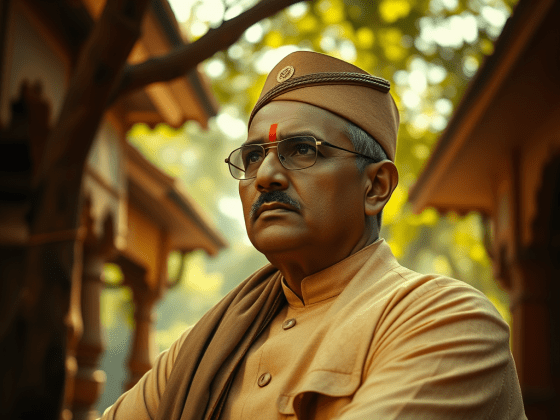
Understanding Hindutva: Its Roots and Ideology
Hindutva, introduced by Vinayak Damodar Savarkar in 1923, embodies a nationalist ideology emerging from Hinduism, emphasizing a collective cultural identity. While attempting to secularize and include all Indian-born communities, it excludes foreign religions. Savarkar defines it as a broader cultural concept distinguished from the religious nuances of Hinduism, though it risks undermining India’s pluralism.
Culture Supersedes Religion in Establishing National Identity
By Promod Puri Culture is a distinctive feature of one group of people comprising of several aspects. One of them … More
Message of Universality in Hindu Mantra
By Promod Puri OM PURNAM MANTRA “Om purnam adah purnam idam purnat purnam udachyate purnasya purnam adaya purnam evavashishyate”. An … More
Hinduism and Lord Ganesh
The art community’s fascination for Lord Ganesh is due to His unique appearance as a clearly recognizable elephant tusk-hooded portrayal. … More
 Promod Puri.com